Last Update: August 24, 2026
Does Texas Have Emissions Testing?
Texas maintains a vehicle emissions inspection and maintenance program in specific counties to improve air quality and comply with federal clean air standards. In Texas no longer requires annual safety inspections for most non-commercial vehicles. However, residents in 17 designated counties must still obtain annual emissions inspections before renewing their vehicle registration.
Understanding Texas Emissions Testing Requirements
The state's emissions testing program operates under the authority of Chapter 548 of the Texas Transportation Code and Chapter 382 of the Texas Health and Safety Code, which establishes the Texas Clean Air Act. The Texas Commission on Environmental Quality (TCEQ) and the Texas Department of Public Safety jointly administer the program.
Which Counties in Texas Require Emissions Testing?
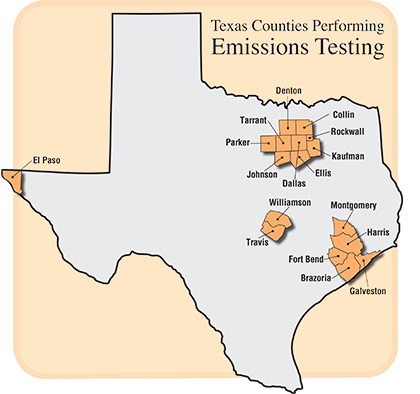
The vehicle emissions inspection requirement applies to vehicles registered in the following 17 Texas counties):
Houston-Galveston-Brazoria Area
- Brazoria County
- Fort Bend County
- Galveston County
- Harris County
- Montgomery County
Dallas-Fort Worth Area
- Collin County
- Dallas County
- Denton County
- Ellis County
- Johnson County
- Kaufman County
- Parker County
- Rockwall County
- Tarrant County
Austin Area
- Travis County
- Williamson County
El Paso Area
- El Paso County
Note: Bexar County (San Antonio area) will begin requiring emissions inspections on November 1, 2026.
Vehicles Subject to Emissions Testing in Texas
Under current Texas emissions inspection regulations, gasoline-powered vehicles between 2 and 24 years old registered in the 17 designated counties must pass an annual emissions inspection.
Vehicle Age Requirements
The emissions testing requirement begins with a vehicle's second registration anniversary and continues through the 24th year of the vehicle's age. Brand-new vehicles and those 25 years or older are exempt from emissions testing.
Vehicles Exempt From Emissions Testing
The following vehicle categories do not require emissions inspections in Texas:
- Electric-powered vehicles
- Diesel-powered vehicles
- Motorcycles
- Commercial motor vehicles (subject to separate commercial inspection requirements)
- Vehicles less than two years old
- Vehicles 25 years or older
Emissions Testing Costs and Fees
According to the Texas Department of Public Safety, the maximum fees for emissions-only inspections are:
| County/Region | Maximum Inspection Fee |
|---|---|
| El Paso, Travis, and Williamson Counties | $11.50 |
| Dallas-Fort Worth and Houston-Galveston Areas | $18.50 |
| Commercial Vehicle Inspection | $40.00 |
State law requires a $2.75 vehicle Emissions Inspection Fee for vehicle registrations in the 17 emissions counties, collected during registration renewal regardless of whether the vehicle requires an emissions test.
Where to Get Emissions Testing in Texas
Texas maintains a network of certified inspection stations throughout emission counties. Vehicle owners can locate authorized facilities using the DPS Emissions Inspection Station Locator.
Recognized Emissions Repair Facilities
If a vehicle fails its emissions inspection, owners can find qualified repair shops through the DPS Recognized Emissions Repair Facility Locator. These facilities specialize in emissions-related repairs and must meet specific certification requirements.
Inspection Timing and Vehicle Registration in Texas
Under the registration-based enforcement system, vehicles must pass the required emissions inspection before registration renewal. The Texas Department of Motor Vehicles or county tax assessor-collector verifies inspection compliance through the DPS inspection database.
Vehicle owners may complete their emissions inspection:
- For initial registration: Not earlier than 90 days before the registration date
- For registration renewal: Not earlier than 90 days before the registration expiration date
- For used vehicles sold by dealers: Within 180 days preceding the sale date
Vehicles temporarily located outside Texas at registration renewal may receive conditional registration approval. Owners must certify the vehicle's out-of-state location and commit to completing the required inspection once the vehicle returns to Texas.